What is a dramaturgy blog?

This blog will serve as a source of research and information for the cast and crew of GPAC's Ragtime. Each post will address specific topics or areas of interest presented in the show. Dramaturgy is meant to highlight the historical, social, political, and economical context of the play as well as answer any questions presented by the cast and crew. Instead of printing packets of information for the cast, this online blog will allow me to continuously share research, pictures, video, music, etc - without wasting any paper! The blog will constantly be updated and under construction so feel free to email me about specific topics: JoanMarieHurwit@gmail.com.

Tuesday, May 31, 2011

What "The Crime of the Century" Would've Looked Like In Court

This first photograph is, I think, the most telling publication for our purposes. 
First a couple of givens: the people in the first photograph are all men, they are all sitting, which leads me to believe that this photo was not staged. However, there's no crowd, so it was either a private, unpopular trial or they are on break. There are several pitchers of what I'm assuming is water, and most of the men are relaxed and non aggressive.  
Now, looking at the picture from the left to right: there is a man sitting all my his lonesome. Why is he so far away? I don't know. He is sitting behind a desk which appears to have nothing on it (or it could be very thin, like paper) and his hand is raised, my guess holding a pen or a cigar; neither would be uncommon. The men at the left table are sitting around a row of books. The judge is clearly at the top center of the photograph with a gavel and something else that I can't make out.  
The only other men of interest are the two partially hidden. One is obviously behind the same barrier as the judge. He's interesting because one would assume that he's on the stand for questioning. However, unless someone took a picture while they were in the middle of trail (which I suppose is possible), why is he on the stand now? If you look to the other side of the judge, there is an empty chair, raised so that the whole court room can view it. This is where I assume the real questioning went on. So what does that make the man behind the banister? Perhaps he is the scribe (or we know this person now as the stenographer), but if so, his instrument is hidden. The man slightly downstage of him is the only one slightly hidden, and although he is facing the correct direction and at the correct position in the room to be the scribe, I'm assuming that since we cannot see an instrument in front of him (which we would if there were one), he is not. The question still remains... how did they record happenings in the court room? 

Facts
  • My guess is the stenograph machine. Created by Ward Stone Ireland, this method of recording speech was commercially feasible circa 1906.
  • The typewriter was invented in 1870; it was used by writers and businesses, however I haven't yet found any substantial evidence that proves that they were used in court rooms.
    *(Fun fact: According to the U.S. Census in 1910, 81% of typists were females, so it wasn't uncommon for them to be decorated in a floral pattern. OooOOoo)*
  • At the turn of the century in the UK, trial proceedings were not consistently recorded. Often times, newspaper reporters would cover the trial in more detail than any scribe in the court and even then, the lower priority cases were not covered at all. Of the few that were in fact indexed, records were handwritten (often difficult to read and difficult to understand due to the use of unfamiliar legal terms).

 This photograph was taken in Richmond, Indiana in 1895. It was the longest jury trial in the U.S. to date, lasting from Jan 2 - May 10.

This next photograph is of the espionage trial of Captain Alfred Dreyfus at Rennes, France in 1899.

This in an engraving by D.H. Friston for Gilbert & Sullivan's "Trial by Jury," 1875.
 

Friday, May 27, 2011

Reference: Moses in the Bulrushes

At Mother's discover of the baby in the garden, she calls Kathleen for assistance.

KATHLEEN:  It's like Moses in the bulrushes!
MOTHER:  It's like nothing of the sort.

This short story should explain this reference.

Joseph died in Egypt when he was a hundred and ten years old; and all the people mourned for him. Some time after this,  there was a king of Egypt who treated them in a harsh manner. He tried to make slaves of them, setting them to all kinds of hard labor. But, the more he oppressed them, the more they increased in number; and the Egyptians were afraid lest, in time of war, the Israelites might turn against them, and make their escape out of the land. So the king commanded that all the sons of the children of Israel, or Hebrews, should be put to death as soon as they were born. But the Hebrews to whom he gave this wicked command did not obey him; at which the king was so angry that he ordered his own people to throw all these poor little children into the river.
       At this time a Hebrew named Amram had a son born: he was a beautiful child, and for three months his mother, Jochebed, succeeded in saving him from the Egyptians. But at last she found she could no longer conceal him. So she made an ark, that is, a sort of cradle, of bulrushes coated over with pitch, laid him in it, and then placed the ark among the reeds that grew by the riverside, while his sister stood watching in the distance to see what would become of him.
       Presently the king's daughter, attended by her women, came down to the river, and, perceiving the ark among the reeds, she sent one of her servants to bring it to her and when she saw the poor little child crying, she was sorry for it, for she knew it must be one of the Hebrew children whom the king had commanded to be killed.
       The child's sister, seeing how the princess pitied him, then came forward, and asked whether she should fetch a Hebrew woman to nurse it for her. The princess bade her do so. So she fetched his own mother, and the king's daughter told her to take the child away and nurse it for her. Then his mother joyfully carried her little one home again.
       When he was old enough to be taken to Pharaoh's daughter, she called him her son, named him Moses, which means "drawn out of the water," and had him taught all that was known to the Egyptians.
http://kids.christiansunite.com/Bible_Stories/Bible_Story_022.shtml
http://greenprophet.com/wp-content/uploads/2008/12/queen-egypt-moses.jpg

Immigrant Rag Ships

These photos and drawings depict the journey that Tateh and The Little Girl take to America. 
http://jewishwebindex.com/port.jpghttp://jewishwebindex.com/Emigration_Ship_Interior.jpghttp://www.mapsphotos.net/ggbain/landscape/main/ggbain03252u.jpghttp://cdn.dipity.com/uploads/events/d7ed99d73c06acfd74ad0b8030b78ec9_1M.pnghttp://i.ytimg.com/vi/XY4kEwROvLY/0.jpg

What is The Little Girl playing with on the ship?

A box that she has keepsakes in, maybe it was an old cigar box...
http://image0-rubylane.s3.amazonaws.com/shops/annasantiques/8666.1F.jpg 
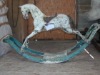
...a handmade wooden wagon, miniature rocking horse, carved dog...
http://www.icollector.com/images/1067/11266/11266_967803_1_sm.jpg


http://www.quintessentia.com/media/catalog/product/cache/1/small_image/126x161/5e06319eda06f020e43594a9c230972d/1/5/15274.jpg
http://i00.i.aliimg.com/photo/v0/240478066/Lines_Bow_circa_1900_Rocking_Horses.summ.jpg


...or a wooden dreidle if it was the only thing they could manage to bring.
http://www.pasarel-art.com/Picture.aspx?width=200&height=200&id=5004588
Dolls were very common, and with Teddy Rosevelt in office, Teddy Bears became a fast favorite.
http://thumbs2.ebaystatic.com/m/mfDZFXAju4A1yGJNGwsuBqw/140.jpg 
http://www.antiquetoychest.com/wp-content/uploads/2010/09/teddy-bear.jpg 
These are examples of toys popular in the early 1900s that The Little Girls would have never had the money to have, it is possible however that The Little Boy might have owned them.

http://www.juliaauctions.com/auctions/archived/toy/jun01/pict0028.jpg


The Emergence of the Camera

The first photograph was taken c.1817, however the photographs were not permanent and eventually faded away.  In 1827, photographs were taken by coating a pewter plate with bitumen and exposing the plate to light. Where the light struck, the bitumen hardened, thus making the unhardened area dissolve away.

In the 1840s and 50s, camera makers experienced with different types of plates, and in the 1870s wet plates soon rivaled dry plates in speed and quality.  Shortened exposure time which made candid photography possible (ie. paparazzi), necessitated another innovation: the mechanical shutter. By the turn of the century, built-in shutters were common for each camera. 

This is the "Victo" -- short for the Victorian plate camera.
http://www.historiccamera.com/librarium/victo/victo_image1.gif
The Century Camera, founded in 1900.
http://farm4.static.flickr.com/3340/3670626378_ba7c2e0b76.jpg

This is the Brownie and the Yale camera, circa 1900. George Eastman's first camera, the Kodak .2 Brownie Box camera, offered a fixed-focus lens and single shutter speed. First offered for sale in 1888, it was a huge hit with consumers because it was a new and exciting invention for a relatively low cost. It came pre-loaded with film for 100 exposures and introduced the concept of the snapshot, soon leading to the movie camera. 
https://blogger.googleusercontent.com/img/b/R29vZ2xl/AVvXsEhGz-gMsR6BTRKN4UyHYQgnjxfaJfixwnKT3pGizJsN8VsG8JpUcH7CmTvBIqVFRtDEmG2gMTnIvpqiJZ1HC6UH9BQ1NFJnhhxilY8_2D31C6GQ3b658yyTI-YaWzH9ZmJ1s4C-8WmazoSS/s1600/696px-Brownie2_overview.jpg http://www.photographyhistory.com/CS03/Yale1900.jpg
Here's an advertisement for children to own cameras of their own.
http://smarthistory.org/assets/images/images/KodakBrownie_advert.jpg

Props for Act 1, Scene 2

If the Brother needs a prop, I thought it was very interesting to find out that ships in bottles were common toys at the turn of the century.  What an appropriate prop!
http://www.la-timonerie-antiquites.com/uploads/items/detail/c7c3c1fae2374a44b8acc2d631f57edecdcee7c7.jpg
This is an advertisement for binoculars in the early 1900s and an example of such binoculars. Definitely a prop that Father would take much pride in.

http://i.ebayimg.com/00/$(KGrHqF,!iME1N2w1YE+BNf!GTozig~~_35.JPGhttp://www.crescentcityauctiongallery.com/images/Nov152008/thumb/66.jpg He would also have a pocket watch and a high end piece of luggage.

http://www3.sympatico.ca/michael332/sun.jpg
 http://www.la-belle-epoque.net/images/bag_0016.jpg http://ny-image3.etsy.com/il_fullxfull.122782907.jpg
If for any need we need to further establish the ship, we can roll on one of these...
http://t3.gstatic.com/images?q=tbn:ANd9GcR6ZXkmUKXiwBV-GbPPG-X4LKLfrbLcrRxj9J5U86moDuGa0kDw

Dances of the Era

Here is a video that gives examples of popular ragtime dances in the early 20th century.
  • The Grizzly Bear is an example of the Animal Dances
  • Castle Walk is a one-step (originated from the animal dances but removed the hopping motion to become a vibrant walk). Irene (American) and Vernon (English) Castle created a dance team and school "which influenced the refinement of american social dance" for the 20th century.
  • The Tango doesn't sound like jazz but is representative of the era.  
  • The Maxixe or Mattchiche is known as the Tango Brazilian ("three converging elements: the European Polka gave the movement, the Cuban habinera gave the rhythm, and the African styles contributed to the syncopation") combined the two step, the one step, and a swooping movement. 
  • The Waltzes of this era were known as Hesitation Waltzes or Bostons; the combination in this video is the Cinderella.